

Many online cleaning schedules demand too much—or give arbitrary frequencies without explaining why. If you’re wondering how often you should clean your house, start with what happens inside your home: how quickly surfaces become dirty, how often they’re used or touched, moisture, dust exposure, food contamination, pets and occupants.
Appliance instructions matter too. A filter’s maintenance schedule cannot safely be guessed from a general household checklist.
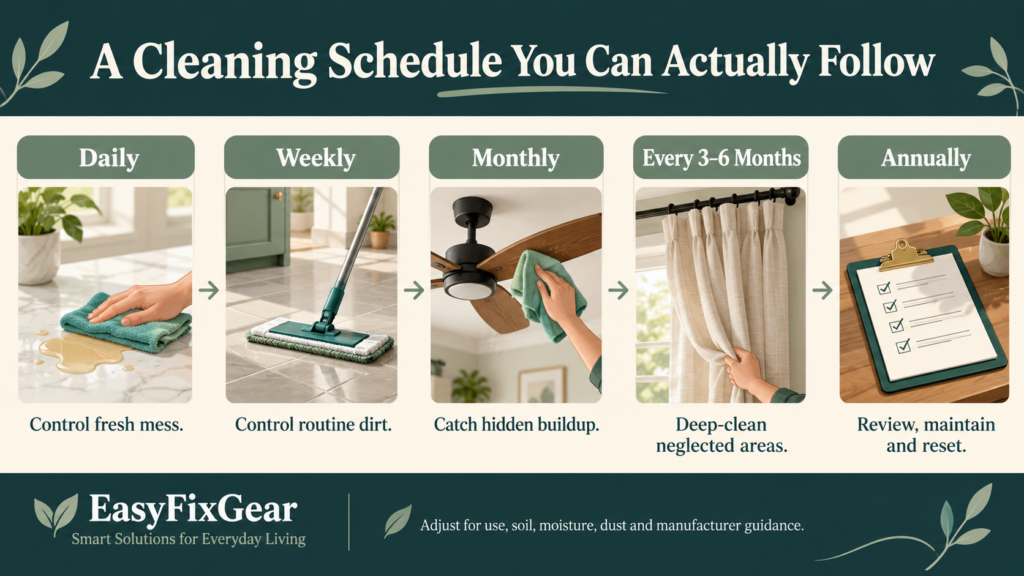
This practical home cleaning schedule uses five levels: Daily, Weekly, Monthly, Every 3–6 Months and Annually. Each is a starting point you can adjust, rather than another reason to feel behind.
The EasyFixGear principle is simple:
Clean according to USE + SOIL + MOISTURE + DUST + MANUFACTURER GUIDANCE—not simply according to the calendar.
How Often Should You Clean Your House? Quick Answer
| Frequency | Typical Tasks | Why |
|---|---|---|
| Daily | Food-preparation surfaces, dishes, fresh spills, visible floor dirt and problematic standing water | Deal with fresh mess, food contamination and moisture before they linger |
| Weekly | General floor cleaning, bathrooms, accessible dusting, kitchen exteriors and bed linen as appropriate | Control routine dirt in regularly used areas |
| Monthly | Check fans, grills, tracks, screens, hidden corners and cleaning tools; inspect AC filters if not due sooner | Catch less obvious buildup |
| Every 3–6 Months | Review curtains, mattresses, storage, exhaust areas and seasonal deep-cleaning needs | Reach neglected areas and reassess seasonal conditions |
| Annually | Review hard-to-reach areas, large furnishings, ventilation and appliance-maintenance requirements | Plan larger jobs and check what actually needs attention |
These are practical starting points, not rigid rules. Clean sooner when something is visibly dirty, wet, contaminated or heavily used, and follow manufacturer instructions for appliances and special surfaces.
Monthly and seasonal appliance reminders are review points, not permission to delay care required sooner by the manual.
What Should You Clean Daily?
Your daily cleaning schedule should control fresh mess, not attempt a complete house clean.
Food-preparation and dining surfaces
Clean kitchen counters after preparing food and dining surfaces after meals. Crumbs, sticky residue and food juices deserve attention when they occur.
Food contamination is an exception to the “looks clean” test. A counter exposed to raw poultry juices needs prompt attention even if no mark remains. The CDC’s food-safety guidance recommends cleaning utensils, cutting boards and countertops after preparing food. Where raw meat or poultry contaminates a surface, follow appropriate food-contact sanitising guidance and product-label instructions.
Cooktop spills, dishes and the sink area
Once the cooktop has cooled, wipe spills and fresh grease using its approved cleaning method. This is usually easier than tackling repeatedly heated residue later.
Wash used dishes and remove food scraps from the sink. Clean the sink area according to its condition, particularly after handling raw food. Keep bathroom-cleaning cloths separate from kitchen cloths.
Floor spills and entryway dirt
Remove liquid spills promptly to reduce slipping and protect moisture-sensitive surfaces. Pick up crumbs, mud and visible grit where they appear.
In dustier homes, a quick entryway or kitchen floor pass may be useful daily. A little-used bedroom may not need the same treatment.
Bathroom water and household waste
Remove problematic standing water after bathing, and dry wet areas where practical. Attend to obvious toilet or basin soil immediately rather than waiting for the weekly clean.
Empty food waste according to quantity, odour, leakage, pests and local collection arrangements. Other bins may need less frequent emptying.
Daily cleaning does not mean spraying disinfectant throughout the house. Cleaning and disinfecting serve different purposes.
What Should You Clean Weekly?
A weekly cleaning schedule is a useful backbone for regularly occupied rooms.
Floors: Sweep or vacuum loose dirt, then mop compatible hard floors when needed. Weekly mopping may suit lightly used rooms; busy tiled kitchens, entryways or pet areas may need more frequent attention. Use the floor maker’s recommended cleaner and moisture level.
Bathrooms: Clean the toilet, basin and shower or bathing area. Include the seat, flush controls and surrounding surfaces. Clean mirrors when splashes or marks interfere with use.
Accessible surfaces: Dust tables, shelves, bedside furniture and other surfaces that accumulate dirt. Work from higher surfaces down, then finish the floor.
Bed linen: A weekly change or wash is a practical starting point for regularly used bedding, adjusted for sweating, pets, spills, illness and fabric-care instructions.
Kitchen exteriors: Wipe appliance handles, the backsplash and frequently touched cabinet areas. Heavy cooking may bring these tasks forward.
Handles and switches: Clean frequently handled surfaces according to use and visible soil. Avoid spraying liquid directly into switches or electrical fittings.
Sofas, balconies and entrances: Vacuum compatible upholstery and remove entryway or balcony dirt as needed. Pets, children, a larger household and frequent visitors can increase the workload.
If you need a suitable floor-cleaning tool, see Best Vacuum Cleaners for Indian Homes. Choose for your surfaces, attachments and maintenance needs rather than assuming every household needs the same machine.
For bathroom tiles and other compatible surfaces, electric spin scrubbers may help reduce manual scrubbing effort, although they do not replace suitable cleaning products or regular maintenance.
What Should You Clean Monthly?
Think of monthly cleaning as a check for hidden buildup—not a requirement to scrub every listed item.
Useful checks include:
- Ceiling fan blades and safely accessible light fixtures.
- Window grills, tracks and mosquito screens where fitted.
- Door frames, door edges and dusty corners.
- Under and behind easily movable furniture.
- Kitchen cabinet fronts and grease-prone surfaces.
- Bathroom corners, grout lines, taps and shower fittings.
- Accessible drain covers and nearby residue.
- Balcony edges and neglected corners.
- Vacuum-cleaner condition and maintenance requirements.
- AC filters, unless the manual or conditions require earlier checks.
Clean only what needs attention. A clean screen in a sheltered room can wait; a road-facing window track packed with dust cannot.
At drains, remove accessible debris using a suitable method. Repeated slow drainage, leakage or odour needs investigation rather than repeated chemical treatment.
AC filters require their own schedule. Manufacturers specify different maintenance requirements by model, filter type and environment. A monthly reminder must not replace more frequent care required by your manual.
What Should You Clean Every 3–6 Months?
Use a seasonal review to select deeper jobs that routine cleaning misses.
Check curtains and blinds for dust or marks, and clean according to their labels. Inspect mattress surfaces and vacuum only where the manufacturer permits it. Address spills promptly; do not soak a mattress as a routine “deep clean”.
Review high shelves, wardrobe interiors, storage boxes and areas beneath larger furniture. Move furniture only when you can do so safely without straining yourself or damaging the floor.
Give windows, balconies and fan blades more detailed attention if routine wiping has left buildup. Inspect exhaust fans and kitchen chimney components, but follow the appliance manual for cleaning, replacement and service.
Refrigerator interiors may benefit from a deeper clean during this review. However, food spills, leaking packages and spoiled-food residue need attention immediately.
Refrigerator coils are model-dependent. Whirlpool’s guidance explains that some models do not require coil cleaning and others require a technician. Clean them only when your manual permits user maintenance.
Review vacuum filters and AC service requirements without assigning them an automatic three- or six-month interval. Never dismantle appliance housings to complete a checklist.
What Should You Clean or Inspect Annually?
Annual cleaning is best treated as a household review.
Consider hard-to-reach dust, safely accessible spaces behind large appliances, deep storage and marks on washable walls. Check whether rugs or large upholstered items actually need deeper cleaning, using their care instructions and allowing adequate drying.
Review window systems, accessible ventilation openings and exhaust areas for dirt, damage or restricted movement. Arrange professional AC maintenance when required by the manufacturer, usage or a performance problem.
Inspect cleaning tools for worn bristles, damaged mop fittings, torn cloths and unavailable replacement parts. Replace according to condition rather than discarding everything after a year.
Use The Ultimate Home Maintenance Checklist alongside this cleaning plan. Leaks, damaged seals and recurring dampness need maintenance, not simply more scrubbing.
Cleaning Schedule by Room
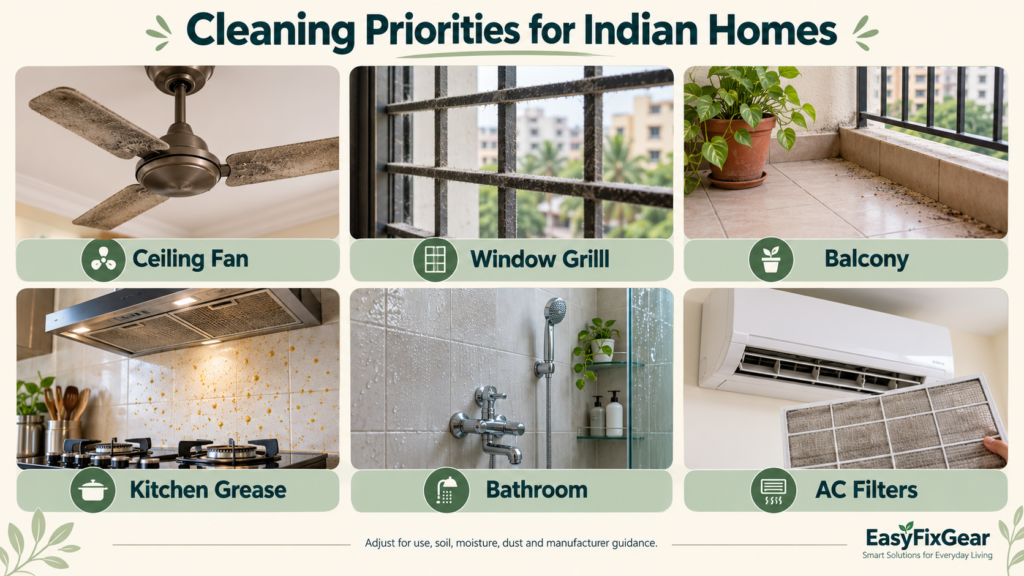
Use this house cleaning checklist to distribute work. “Weekly” and other intervals remain adjustable; appliance manuals take priority.
| Area | Daily/As Needed | Weekly | Monthly | Every 3–6 Months | Annually/As Needed |
|---|---|---|---|---|---|
| Kitchen | Food surfaces, dishes, spills | Exteriors, handles, floor | Cabinet fronts, grease corners | Fridge deeper clean; review chimney manual | Appliance and ventilation review |
| Bathroom | Spills, wet areas, obvious soil | Toilet, basin, shower | Corners, fittings, accessible drain covers | Review persistent scale and dampness | Inspect recurring leaks or damage |
| Bedroom | Spills, visible dirt | Floors, dusting, linen as appropriate | Under movable furniture, fans | Curtains, mattress care, wardrobes | Larger furnishing and storage review |
| Living room | Crumbs, spills | Floors, dusting, sofa surface | Fans, frames, furniture gaps | Curtains, high shelves | Rugs/upholstery if needed |
| Floors | Spot-clean dirt and liquids | General clean; suitable mopping | Edges and accessible gaps | Beneath larger furniture where safe | Review wear and care needs |
| Balcony | Mud, spills, standing water | Sweep according to dust | Deeper surface and corner clean | Seasonal detailed clean | Review drainage and damage |
| Windows | Fresh contamination | Dusty sills as needed | Grills, tracks, screens | Glass and frame clean as needed | Window-system review |
| Utility/storage | Spills, waste, dampness | Used surfaces and floors | Corners and accessible shelves | Storage interiors | Declutter and review maintenance |
Avoid turning every cell into a separate job. Cleaning a bathroom basin can include its tap and nearby splashes in one session.
How Dust Changes Your Cleaning Schedule
A cleaning schedule for Indian homes should reflect local conditions. Some homes are relatively sheltered; others face a busy road, nearby construction or an exposed balcony.
Dry weather, open windows, pets and high foot traffic can bring forward floor cleaning and accessible dusting. Fans, grills, mosquito screens and window tracks may accumulate dirt faster than the calendar suggests.
Capture loose dust with an appropriate vacuum or cloth rather than repeatedly scattering it. Clean higher surfaces before floors. Check the vacuum’s bin, bag and filters more closely when it collects large amounts of dust.
An entry mat and a practical shoe-removal area can reduce tracked-in dirt. Clean the mat too.
Open-window ventilation involves a trade-off when outdoor dust is high. Choose suitable times and openings for your conditions rather than keeping every window open continuously.
Unknown or hazardous construction debris needs appropriate specialist handling; an ordinary household vacuum is not suitable for every type of dust.

How the Monsoon Can Change Your Cleaning Routine
During humid monsoon conditions, drying may take longer. Wet balconies, muddy shoes, damp bathroom corners and musty fabrics may need more attention even if dust has reduced.
Prioritise removing water, drying cloths and mop heads, keeping wet footwear away from stored fabrics and checking cupboards or walls for damp patches.
Ventilate bathrooms and cooking areas appropriately. When outdoor air is very humid, opening windows alone may not solve indoor dampness; suitable dehumidification or AC operation may help.
The EPA’s household mould guidance emphasises fixing moisture sources and drying wet materials promptly. It recommends keeping relative humidity below 60% where possible, ideally 30–50%.
Recurring mould needs investigation. Cleaning alone cannot correct a leaking pipe, rainwater entry or persistent condensation.
Avoid brushing mould aggressively or soaking affected materials. Extensive, recurring, hidden or sewage-related contamination warrants appropriate professional advice. Painting over damp mould does not resolve its cause.
Why Indian Kitchens May Need a Different Schedule
In frequently used kitchens, frying, tadka, splattering oil and repeated cooking can leave grease on more than the cooktop.
Check the backsplash, cabinet fronts, nearby tiles and accessible exhaust surfaces. Wipe fresh deposits when the area has cooled, using a cleaner suitable for the finish. A lightly used kitchen may need these tasks much less often.
Kitchen chimney care depends on its design. Washable grease filters, replaceable filters and appliances with an automatic cleaning function have different requirements. An “auto-clean” label is not a substitute for reading the manual.
Follow the manufacturer’s cleaning or replacement schedule and approved method. Do not wait three months if care is required sooner, and do not dismantle internal components.
The useful question is: Where does grease actually settle in this kitchen? Add those places to your routine.
Bathroom Cleaning: Don’t Wait for Heavy Buildup
Soap residue and mineral deposits are easier to manage before they become heavy layers.
Where practical, wipe taps, squeegee suitable shower surfaces and remove standing water after bathing. Drying reduces the water left to evaporate and deposit minerals, although it does not eliminate hard-water problems.
During the weekly clean, check grout, tap bases and shower fittings. Give persistent corner buildup more detailed attention during your monthly review.
Choose cleaners by surface. Acidic descalers may damage natural stone, cement-based grout or certain metal finishes. The Natural Stone Institute warns that vinegar, lemon and other acids can dull or etch acid-sensitive stone.
Identify the material, follow its care guidance and test where appropriate. For surface-specific options, read How to Remove Hard Water Stains from Bathroom Tiles & Taps.
How Often Should You Clean Ceiling Fans?
A monthly check may be reasonable for many homes. Clean when dust has accumulated rather than treating the date as a compulsory washing day.
Dusty, open-window or road-facing homes may need more frequent attention. A fan in a rarely used, sheltered room may need less.
Turn the fan off and wait until the blades stop completely. Use an appropriate reaching tool or stable access equipment; avoid unstable chairs and stools.
Follow the fan’s care instructions, avoid bending blades and keep water away from electrical components. Catch loosened dust, then clean the floor below.
If access is unsafe, arrange help. Routine fan cleaning should not become electrical repair work.
How Often Should You Clean AC Filters?
AC-filter care depends strongly on the specific model, filter type, usage, dust, pets and indoor environment.
For example, Samsung India’s filter guidance gives a two-week recommendation while noting that conditions can change the interval. Another Samsung regional maintenance guide lists at least monthly filter cleaning. These are documented examples—not interchangeable rules for every AC.
Check the manual for your exact model and follow its reminders. During heavy use or in dusty environments, inspect more frequently than a general household calendar suggests.
Dust-loaded filters can restrict airflow and affect cooling performance. That does not establish a universal health benefit or a guaranteed energy-saving percentage from cleaning.
Switch off and isolate power as instructed before approved user maintenance. Wash only filters identified as washable, follow drying requirements, and leave internal servicing to qualified personnel.
Don’t Forget to Clean Your Cleaning Tools
A house cleaning schedule is incomplete if the tools themselves remain dirty.
Check the vacuum’s dust-bin fill mark or bag indicator, filter requirements, brush roll and accessible hose. Disconnect power before inspection and remove only parts intended for user maintenance.
Never wash a vacuum filter unless the manufacturer explicitly says it is washable. “HEPA” describes filtration performance, not washability. Some filters need dry care or replacement. Dyson’s official filter instructions, for example, distinguish washable components from a post-motor filter that should not be washed.
Read How to Clean a Vacuum Cleaner Filter Properly for safe identification and care. If pickup has declined, use Why Is My Vacuum Cleaner Losing Suction? rather than repeatedly running a struggling machine.
Our Vacuum Cleaner Suction Power Explained guide explains why airflow, filters and the cleaning head matter alongside specifications.
Wash or rinse mop heads, microfibre cloths, scrub brushes and permitted spin-scrubber heads after dirty work, following their instructions. Let them dry before storage; keep powered parts dry.
You May Need to Clean More Often If…
Bring relevant tasks forward when you have:
- Pets shedding hair or tracking dirt.
- Young children creating spills or using floor play areas.
- A large household, frequent guests or heavy foot traffic.
- Road or construction dust entering through openings.
- Open windows that increase incoming dirt.
- Heavy cooking and grease accumulation.
- High humidity or persistent wet areas.
- Visible soil, fresh spills or contamination.
Increase the task that addresses the problem. A muddy entrance does not automatically require washing every curtain.
Food contamination deserves prompt care even when it is not visible. During illness or for vulnerable occupants, follow appropriate health guidance rather than relying only on this general schedule.
You May Be Able to Clean Less Often If…
Some tasks can wait when rooms are lightly used, there are few occupants, cooking is limited, and dust exposure is low.
Good entryway dirt control also helps. If shelves, windows or a guest-room floor remain clean, inspect them at the usual reminder and postpone unnecessary cleaning.
Do not reduce food-safety practices, leave spills untreated or extend appliance-maintenance intervals beyond the manual.
A useful cleaning checklist should include the option “checked—no cleaning needed”. Inspection is often enough to decide what can wait.
Cleaning vs Disinfecting: They Are Not the Same
Cleaning removes dirt and many germs through an appropriate cleaning process.
Disinfecting uses suitable products or processes to kill or inactivate remaining germs. It generally follows cleaning rather than replacing it.
The CDC’s current household guidance says routine cleaning is generally sufficient in many situations. Additional disinfection is relevant when someone is sick or has a weakened immune system.
Routine homes therefore do not need indiscriminate whole-house disinfection every day. Food-contact sanitising is a separate consideration when surfaces are contaminated by raw meat or poultry.
When disinfection is appropriate, follow the product’s surface restrictions, dilution, protective-equipment and contact-time instructions. Keep products safely away from children and pets.
Common House-Cleaning Schedule Mistakes
Trying to clean everything daily. This creates unnecessary work and makes the routine harder to sustain.
Waiting until everything is filthy. Deal with spills, food contamination and wet areas promptly; do not let a weekly reminder justify leaving them.
Using one schedule for every household. A busy family kitchen and a low-use guest room have different needs.
Ignoring seasonal moisture, fans and grills. Floors may look clean while dust or dampness accumulates elsewhere.
Ignoring tools and appliance manuals. A dirty brush or incorrectly cleaned filter can undermine the work.
Overusing disinfectants or unsuitable cleaners. More product does not guarantee better results and may damage surfaces.
Mixing chemicals. Never mix bleach with acids, ammonia or other incompatible cleaning products. Acidic toilet cleaners and descalers are particularly important to keep separate from bleach. The CDC warns against mixing bleach with other cleaners or disinfectants.
Scheduling every deep-cleaning task together. Spread jobs across manageable sessions instead of creating one exhausting day.
A Realistic Cleaning Routine for Busy Households
Here is an example—not a promise that every home fits these times:
| Level | Example routine |
|---|---|
| Daily | A 10–20 minute reset for dishes, food surfaces, spills and obvious dirt |
| Weekly | One or two focused blocks for bathrooms, floors, dusting and linen |
| Monthly | Rotate three or four deeper tasks rather than doing every item together |
| Every 3–6 Months | Select seasonal jobs involving curtains, storage and neglected spaces |
| Annually | Review larger cleaning jobs, maintenance and tool condition |
Choose a small minimum routine for particularly busy days: food safety, spills, problematic water and urgent waste.
Share tasks where possible, and keep frequently used supplies accessible but safely stored. Use tools that solve recurring problems; Best Cleaning Gadgets That Actually Make Housework Easier can help you assess usefulness.
How We Developed This Cleaning Schedule
EasyFixGear developed this practical cleaning schedule by reviewing publicly available household-cleaning guidance, food-safety recommendations, manufacturer maintenance instructions and common cleaning needs in Indian homes.
We considered how household usage, visible dirt, dust exposure, cooking, humidity and seasonal conditions can affect cleaning priorities.
The daily, weekly, monthly and seasonal intervals in this guide are editorial starting points—not universal hygiene standards or manufacturer-prescribed maintenance schedules.
Where a task involves food contamination, illness, appliance maintenance or a particular surface material, relevant safety guidance and manufacturer instructions take priority.
We have not conducted controlled hygiene testing to establish these cleaning frequencies. Readers should adapt the schedule to their household conditions rather than treat every suggested interval as mandatory.
The EasyFixGear Cleaning Schedule
The five levels give each type of work a clear purpose:
- DAILY — Control fresh mess.
- WEEKLY — Control routine dirt.
- MONTHLY — Catch hidden buildup.
- EVERY 3–6 MONTHS — Deep-clean neglected areas.
- ANNUALLY — Review, maintain and reset.
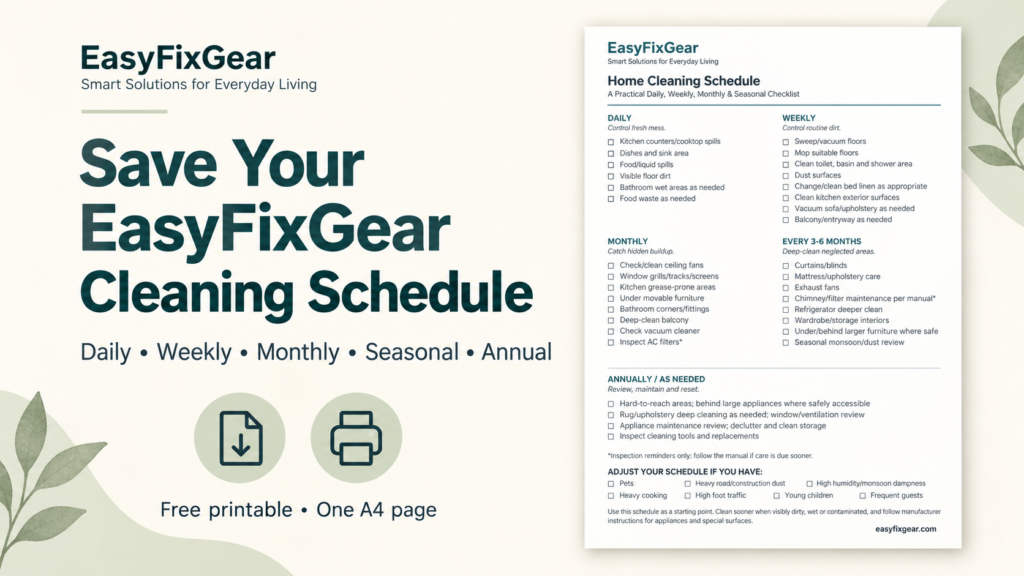
Use the EasyFixGear Home Cleaning Schedule printable alongside this article. Mark applicable tasks, move appliance reminders to their manual-required intervals and leave low-use items for later when appropriate.
How Often Should You Clean Your House? Final Answer
The answer to how often you should clean your house depends on what your household actually needs. There is no perfect universal cleaning calendar.
A useful schedule combines calendar frequency + visible condition + usage + dust/moisture + manufacturer guidance.
Control fresh mess daily, review routine dirt weekly and spread deeper work across monthly, seasonal and annual reminders. Clean sooner when conditions require it, and use the printable schedule as a starting point you can customise.
Frequently Asked Questions
How often should you clean your house?
Handle spills, food-preparation mess and problematic wet areas promptly. Use weekly reminders for routine cleaning and monthly, seasonal or annual reviews for deeper tasks. Adjust for use, dirt, moisture, dust and appliance instructions.
What should you clean every day?
Prioritise used food-preparation surfaces, dishes, fresh spills, visible floor dirt and problematic bathroom water. Remove food waste according to household needs. These tasks do not require daily whole-house disinfection.
What should you clean once a week?
Weekly cleaning commonly includes floors, bathrooms, accessible dusty surfaces and kitchen exteriors, plus bed linen as appropriate. Increase or reduce individual tasks according to use and condition.
What should you clean once a month?
Check ceiling fans, window grills, tracks, screens, furniture gaps, grease-prone areas and bathroom corners. Review cleaning tools and AC filters, but follow earlier appliance-maintenance intervals where specified.
How often should you mop floors?
Mop compatible floors according to soil and traffic. Weekly may suit lightly used rooms; busy kitchens, muddy entrances and pet areas may need more frequent cleaning. Remove spills promptly and follow floor-care instructions.
How often should you clean bathrooms?
A weekly thorough clean is a practical starting point for regularly used bathrooms. Clean obvious soil sooner and manage standing water after use. Shared bathrooms, heavy use and persistent moisture may require more attention.
How often should you clean ceiling fans?
Check monthly as a starting point and clean when dusty. Open-window, road-facing, or dustier homes may need more frequent attention. Turn the fan off and use safe access equipment.
How often should you clean AC filters?
Follow the exact model’s manual. Usage, dust, pets and filter type affect the interval. A monthly household reminder must not replace more frequent manufacturer-required care.
How often should you deep-clean your house?
Review neglected areas every three to six months, then select tasks that need attention. Spread work across sessions and follow separate appliance instructions. Spills, contamination and dampness should not wait for deep-cleaning day.
Does monsoon season change how often you should clean?
It can. Humid conditions may increase drying time, muddy footwear, damp corners and musty fabrics. Prioritise moisture control and investigate recurring dampness; cleaning alone cannot fix its source.