
Owning a home comes with a long list of small jobs. A loose cabinet handle needs tightening. A picture frame needs hanging. A tap starts dripping. A new piece of furniture arrives in a flat box. Or perhaps you simply need to measure a wall before buying a new shelf. Calling a professional for every minor task is neither practical nor necessary. A carefully chosen collection of essential tools for homeowners can help you handle many everyday repairs, installations, adjustments, and maintenance jobs yourself. You don’t need a workshop full of expensive equipment, either. For most households, a compact set of dependable hand tools plus one or two power tools is enough.
If you’re a first-time homeowner, renter, or complete DIY beginner, this guide will help you understand which tools are genuinely useful, what to look for when buying them, and where you can save money.
Let’s build a practical home tool kit for 2026.
Basic tools can help with many routine household tasks, but electrical repairs, gas-related work and structural modifications should be left to appropriately qualified professionals.
Essential Tools for Homeowners at a Glance
| Tool | Main Purpose | Priority | Budget |
|---|---|---|---|
| Claw hammer | Driving/removing nails | Essential | Low |
| Screwdriver set | Tightening/removing screws | Essential | Low |
| Combination pliers | Gripping, bending and cutting | Essential | Low |
| Adjustable wrench | Nuts, bolts and plumbing fittings | Essential | Low–Medium |
| Tape measure | Measuring spaces and objects | Essential | Low |
| Utility knife | Cutting packaging and materials | Essential | Low |
| Spirit level | Checking horizontal/vertical alignment | Useful | Low |
| Cordless drill/driver | Drilling and driving screws | Highly useful for regular DIY | Medium |
| Drill bit set | Drilling different materials | Useful | Low–Medium |
| Allen/hex key set | Furniture and fittings | Essential | Low |
| Electrical tester | Basic electrical checking | Useful* | Low |
| Rechargeable work light | Lighting dark work areas | Essential | Low–Medium |
| Step ladder | Reaching elevated areas safely | Essential | Medium |
| Tool box/organizer | Tool storage | Useful | Low–Medium |
| Safety gear | Personal protection | Essential | Low–Medium |
*An electrical tester does not make electrical work safe for an untrained person. Complex electrical repairs should be handled by a qualified electrician.

1. Claw Hammer
A claw hammer is one of the simplest and most useful household repair tools you can own. One side of the head drives nails, while the curved claw on the opposite side helps pull them out.
Why you need one
You’ll find yourself reaching for a hammer when hanging pictures, assembling simple wooden items, removing old nails, repairing loose boards or completing small DIY projects.
For general household use, you don’t need a particularly large or heavy hammer. A comfortable, medium-sized model is easier for beginners to control.
What to look for
Look for:
- A comfortable non-slip grip
- A securely attached head
- Good balance
- A smooth striking face
- A curved claw that can grip nails properly
Buying tip: Avoid choosing the cheapest hammer simply because all hammers look similar. A comfortable grip and good balance make a noticeable difference.
Basic or premium? A good mid-range hammer is sufficient for most households.
2. Screwdriver Set
If you buy only a handful of tools when moving into a new home, a screwdriver set should be near the top of your list.
Screws are everywhere—from furniture and door handles to electrical faceplates, appliances, toys and storage units.
At minimum, your set should include several sizes of both Phillips-head and flat-head screwdrivers.
What beginners should look for
Choose screwdrivers with:
- Comfortable, slip-resistant handles
- Clearly marked sizes
- Hardened tips
- Multiple common sizes
- Magnetic tips, if possible
A multi-bit screwdriver can save space, but individual screwdrivers are often more convenient when you’re doing repeated work.
Buying tip: Don’t use the wrong screwdriver size. A poorly fitting tip can damage the screw head and make removal much harder.
Basic or premium? This is one area where spending slightly more for a durable set is worthwhile.
3. Combination Pliers
Combination pliers are essentially an extra pair of strong fingers.
They can grip, twist, bend and, depending on their design, cut wire. They’re particularly useful when something is too small, tight or stubborn to handle comfortably with your fingers.
Common uses include:
- Gripping small nuts
- Pulling objects
- Bending wire
- Holding components
- Cutting light wire
- Minor DIY work
Look for textured jaws, insulated or comfortable handles and a smooth hinge.
Buying tip: Pliers are not a substitute for a wrench when tightening nuts and bolts. Using them incorrectly can damage fasteners.
Basic or premium? A reliable mid-range pair should last for years in normal household use.
4. Adjustable Wrench
An adjustable wrench has a movable jaw that lets it fit nuts and bolts of different sizes.
That makes it particularly useful for homeowners who don’t yet want to invest in a complete spanner or socket set.
You may use it for:
- Tightening plumbing fittings
- Furniture assembly
- Adjusting bolts
- Minor bicycle repairs
- Tightening household fixtures
Look for smooth jaw adjustment, clearly marked measurements and a comfortable handle.
Buying tip: Make sure the wrench fits snugly around the fastener before applying pressure. A loose fit can round the edges of a nut.
Basic or premium? Mid-range is ideal. Precision in the adjustable jaw matters more than fancy features.
5. Tape Measure
A tape measure may not feel like an exciting purchase, but you’ll probably use it more often than many expensive tools.
Want to know whether a sofa will fit through a doorway? Measure it.
Installing curtains? Measure first.
Buying a refrigerator? Measure the space.
Hanging artwork? Measure.
A tape of around 3–5 metres is adequate for many household tasks, although a longer one can be useful for larger homes and outdoor projects.
Useful features
Look for:
- Clear metric markings
- Strong blade
- Reliable locking mechanism
- Easy-to-read numbers
- Durable case
- Belt clip if you regularly do DIY work
Basic or premium? Basic is fine, provided the tape retracts smoothly and the markings are clear.
6. Utility Knife
A utility knife is considerably safer and more effective than trying to open everything with kitchen scissors or an unsuitable blade.
It’s useful for:
- Opening delivery boxes
- Cutting cardboard
- Trimming wallpaper
- Cutting plastic sheets
- Craft and DIY projects
- Removing packaging
Choose a model with a secure locking or retracting mechanism and easily replaceable blades.
Buying tip: A sharp blade is generally easier to control than a dull blade that forces you to apply excessive pressure. Always cut away from your body, keep your free hand clear of the cutting path, and retract or cover the blade immediately after use.
Basic or premium? A simple, well-designed knife is enough.
Keep utility knives and spare blades safely away from children.
7. Spirit Level
You’ve probably seen shelves, frames or televisions that look slightly crooked even though nobody can quite agree which way they’re leaning.
A spirit level solves that problem.
It helps you determine whether something is properly horizontal or vertical before you drill holes or tighten fittings.
Common uses include:
- Hanging shelves
- Installing curtain rods
- Mounting pictures
- Positioning cabinets
- Checking appliances
- DIY construction
Traditional bubble levels are inexpensive and don’t need batteries.
Buying tip: For general home use, you don’t necessarily need a large professional level. A compact model works for many everyday jobs.
Basic or premium? Basic to mid-range.
8. Cordless Drill/Driver

A cordless drill/driver is probably the first power tool I’d add to a serious basic home tool kit.
It can drill holes and drive screws much faster than doing everything manually.
You can use one for:
- Furniture assembly
- Drilling into wood
- Installing shelves
- Driving and removing screws
- Hanging fixtures
- Building DIY projects
Planning to buy a cordless drill? Read our Best Cordless Drills for Home Use in India guide to compare suitable options for everyday DIY tasks.
What should a beginner look for?
Rather than simply choosing the drill with the biggest numbers on the box, consider:
- Adjustable speed
- Variable torque/clutch settings
- Comfortable grip
- Forward and reverse operation
- Keyless chuck
- Battery capacity
- Battery availability
- Tool weight
- Availability of compatible accessories
For occasional home DIY, a compact cordless drill is often more practical than a large professional model.
Buying tip: Consider the battery ecosystem. If you later buy other cordless tools from the same compatible system, being able to share batteries can save money.
Basic or premium? Mid-range is usually the sweet spot for homeowners.
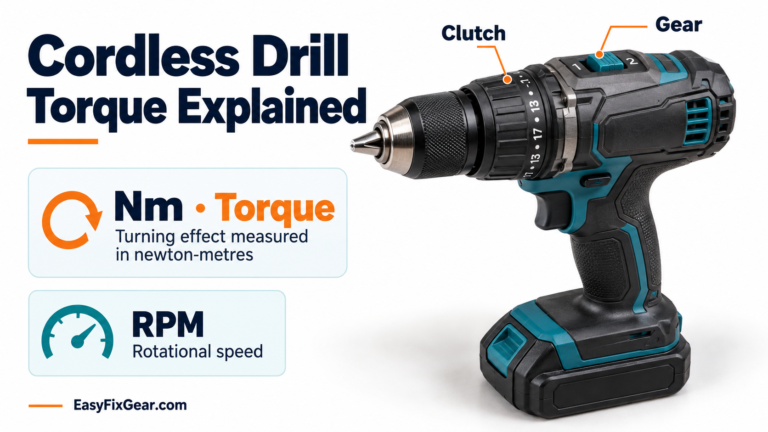
Not sure which type suits your needs? Read our Cordless vs Corded Drill: Which Is Better for Home Use? Also Learn how drill torque and clutch settings work before driving furniture screws or choosing a household drill.
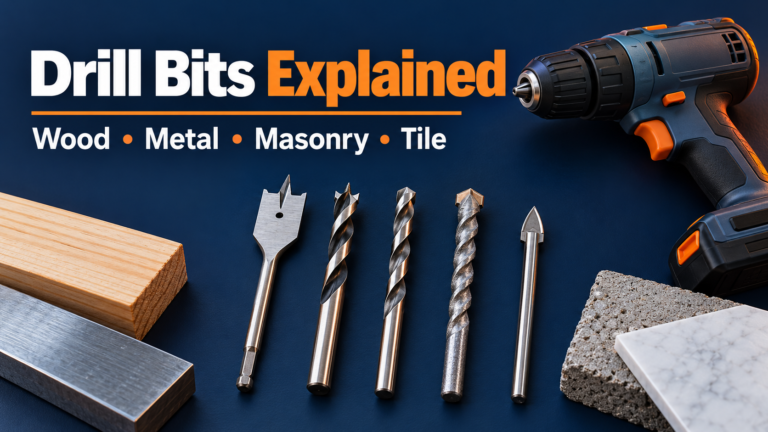
9. Drill Bit Set
A drill isn’t particularly useful without the correct bit.
Different drill bits are designed for different materials and tasks. A beginner’s set might contain bits intended for wood, metal and masonry, as well as screwdriver bits.
The important lesson is simple:
Use the correct bit for the material you’re working on.
Don’t assume one bit will safely and effectively drill everything.
For detailed knowledge about Drill Bits, read our guide on different types of drill bits and their use.
What to look for
Choose a clearly labelled set with the common sizes you’re likely to use. A storage case is extremely helpful because small drill bits disappear surprisingly easily.
Buying tip: You don’t need a giant 100-piece set just because it appears to offer better value. A smaller set of useful sizes and suitable bit types may serve you better.
Basic or premium? Start with a decent basic set. Replace frequently used bits with better ones as necessary.
10. Allen/Hex Key Set
If you’ve ever assembled flat-pack furniture, you’ve probably encountered an Allen key.
These small L-shaped tools fit hexagonal socket screws commonly found in:
- Furniture
- Shelving
- Bicycles
- Door hardware
- Exercise equipment
- Household accessories
Many products include a small Allen key in the box, but keeping a complete set at home is far more convenient.
Look for clearly marked sizes and a holder that keeps the keys organised.
Buying tip: Make sure your set covers the measurement system commonly used by the products you own; sets containing a useful range of metric sizes are particularly handy in many households.
Basic or premium? A basic quality set is usually sufficient.
11. Electrical Tester
An electrical tester can be useful for basic checks, but this tool requires an important warning.
Owning a tester does not qualify you to perform electrical repairs.
Depending on the type of tester, it may help determine whether electrical voltage is present. However, testers have limitations, must be used exactly as specified by their manufacturer, and should never be treated as permission to work on energised wiring.
Electrical hazards can cause severe shock, burns, fire or death. Consumer safety guidance also identifies home wiring and electrical products as important sources of electrical hazards.
If a job involves opening fixed wiring, modifying circuits, replacing breakers, diagnosing an electrical fault, or doing anything you’re not trained to perform, call a qualified electrician.
Buying tip: Choose an appropriately rated tester from a reputable manufacturer and read its instructions before use.
Basic or premium? Buy for reliability and appropriate safety ratings rather than choosing purely by price.
12. Flashlight or Rechargeable Work Light
Trying to repair something while holding your phone’s flashlight in one hand gets frustrating very quickly.
A proper flashlight or rechargeable work light lets you illuminate:
- Under sinks
- Behind appliances
- Electrical panels without touching them
- Inside cupboards
- Garages
- Attics
- Outdoor areas
- Dark rooms during power failures
A headlamp can be even more convenient because it leaves both hands free.
Look for good battery life, practical brightness levels, stable placement and USB charging if you prefer rechargeable equipment.
Buying tip: Keep the light charged and accessible. A work light hidden at the bottom of a cupboard with a dead battery isn’t much help during a power cut.
Basic or premium? Basic to mid-range.
13. Step Ladder
Standing on a dining chair to reach a curtain rod or high shelf may seem convenient, but a proper step ladder is the more appropriate tool.
A household step ladder is useful for:
- Changing accessible light bulbs
- Cleaning high shelves
- Hanging curtains
- Painting
- Reaching storage
- Installing decorations
Choose one with a stable base, non-slip feet, secure locking/spreader mechanisms and a suitable load rating.
Before using any ladder, inspect it and place it on a stable, level surface. Face the ladder while climbing and maintain secure contact. OSHA’s portable-ladder guidance recommends three-point contact and warns against using damaged ladders or standing on a top step unless it was designed for that purpose.
Keep ladders well away from exposed electrical equipment and overhead electrical lines.
Buying tip: Don’t buy purely on height. Stability, construction quality and an appropriate load rating matter more.
Basic or premium? A good-quality ladder is worth paying more for because safety is involved.
14. Tool Box or Organiser

Buying tools is only half the job. You also need to know where they are.
A tool box keeps your hammer, screwdrivers, measuring tools, drill bits, fasteners and accessories organised and protected.
For a small home collection, look for:
- Strong handle
- Secure latches
- Separate compartments
- Enough space for future tools
- Small-parts storage
If you already have a cordless drill, check that the organiser has enough room for the drill, charger and batteries.
Buying tip: Don’t buy a huge professional toolbox for 10 small tools. Choose something slightly larger than you currently need.
Basic or premium? Basic to mid-range.
15. Safety Gear

Safety equipment belongs in your tool kit, not on an optional shopping list.
At minimum, consider keeping:
- Safety glasses
- Suitable work gloves
- Dust masks or appropriate respiratory protection for relevant tasks
- Hearing protection when using loud equipment
- Closed-toe footwear
The correct protective equipment depends on the task and hazard. Eye protection is particularly important when work can produce flying particles or debris. NIOSH guidance recommends choosing eye protection appropriate to the hazard.
Power tools should also be used with their intended guards and attachments in place, and damaged tools should be removed from service rather than improvised or continued in use.
Buying tip: Don’t treat protective equipment as the place to save the last few rupees in your tool budget. Fit, suitability and recognised safety standards matter.
Basic or premium? Buy appropriate, properly fitting safety equipment from reputable sources.
How to Build Your First Home Tool Kit Without Overspending
Seeing 15 tools on one list doesn’t mean you need to order all 15 today.
Build your collection according to the jobs you actually perform.
Prefer to buy the basics together? See our guide to the Best Tool Kit for Home Use in India.
Stage 1: Start with the basics
I’d prioritise:
- Screwdriver set
- Claw hammer
- Combination pliers
- Adjustable wrench
- Tape measure
- Utility knife
- Flashlight/work light
- Basic safety equipment
These tools cover a surprisingly large number of everyday jobs.
Stage 2: Add DIY capability
Once you start hanging shelves, assembling furniture or performing more maintenance, consider adding:
- Cordless drill/driver
- Drill bits
- Spirit level
- Allen key set
- Step ladder
Looking for projects you can tackle with a basic toolkit? ‘10 Easy DIY Home Repairs You Can Do Yourself‘.
Stage 3: Buy specialised tools only when necessary
Once you know what kind of DIY work you actually enjoy or regularly need, you can invest in tools for woodworking, gardening, plumbing, painting or automotive maintenance.
This approach prevents your storage cupboard from filling up with expensive tools you use once.
Hand Tools vs Power Tools: What Does a Beginner Really Need?
Power tools are convenient, but beginners often assume they need far more of them than they actually do.
For many basic household tasks, hand tools are cheaper, easier to store and perfectly adequate.
A screwdriver can tighten a cabinet handle. You don’t need an electric impact driver.
A hand saw may be sufficient for one occasional cut. You don’t necessarily need a circular saw.
The major exception for many homeowners is a cordless drill/driver. Because drilling and screw-driving happen so often in home projects, it can justify its cost quickly for someone who does regular DIY.
Start with hand tools. Add power tools when repeated jobs make them worthwhile.
Tools You Probably Don’t Need Immediately
A beginner’s tool kit doesn’t need to resemble a professional contractor’s workshop.
Unless you have a specific project requiring them, you can probably postpone buying:
- Angle grinder
- Circular saw
- Reciprocating saw
- Rotary hammer
- Nail gun
- Welding equipment
- Large air compressor
- Professional socket collections
- Specialised plumbing tools
- Expensive woodworking machinery
You can also rent or borrow some specialised tools for occasional projects.
The best tool collection isn’t the largest one. It’s the collection that matches the work you actually do.
Essential Tool Safety Tips for Homeowners
Having the right tools is only part of maintaining a home safely. Before using any hand or power tool, learn the hand and power tool safety guidance first. Whether you’re assembling furniture, tightening loose fittings or completing minor DIY repairs, a few precautions can help prevent injuries and accidental damage.
1. Wear Appropriate Protective Equipment
Use safety glasses when drilling, hammering or working with materials that may produce flying particles. Choose suitable gloves when handling sharp or rough materials, but keep loose gloves away from rotating machinery.
For dusty work, use respiratory protection appropriate to the material and exposure. Avoid disturbing materials that may contain asbestos or other hazardous substances.
2. Check for Hidden Electrical Wires and Pipes
Before drilling into a wall, consider where electrical cables, water pipes and other concealed services may run.
A wall scanner may help identify some hidden objects, but it cannot guarantee that an area is safe to drill.
If you cannot establish a safe drilling location, consult a qualified professional.
3. Never Work on Live Electrical Circuits
Avoid repairing switches, sockets, distribution boards or exposed electrical wiring unless you are appropriately qualified.
Switching off a wall switch does not necessarily make wiring safe. Electrical work requires proper isolation and verification.
For electrical repairs, contact a qualified electrician.
4. Use the Correct Tool for Each Job
Use screwdrivers that fit the fastener, appropriate drill bits for the material and tools rated for the intended task.
Secure workpieces before drilling or cutting. Never hold a small workpiece in your hand while drilling it.
Follow the manufacturer’s instructions, including recommended operating limits and maintenance procedures.
5. Inspect Tools Before Use
Check hand tools for damaged handles, loose components and worn working surfaces.
Inspect power tools for damaged cables, cracked housings, loose accessories and unusual operating behaviour.
Do not use damaged equipment. Disconnect power or remove the battery before changing accessories or performing maintenance, following the manufacturer’s instructions.
6. Know When to Call a Professional
Some household repairs involve hazards that ordinary DIY tools cannot eliminate.
Seek qualified professional help for:
- Electrical wiring, distribution boards and uncertain electrical faults.
- Gas appliances, gas lines and suspected gas leaks.
- Structural repairs or work affecting load-bearing components.
- Work at height that requires specialist access or fall protection.
- Plumbing repairs involving concealed pipes or significant water damage.
Safety reminder: Start with small, low-risk maintenance tasks. Never attempt a repair simply because you own the necessary tools. Understanding the hazards matters just as much as choosing the equipment.
How to Store and Maintain Your Tools
A good tool can last many years if you take basic care of it.
Keep tools dry
Moisture encourages rust. Don’t leave metal tools outdoors or in damp areas for long periods.
Clean them after messy jobs
Remove dirt, sawdust, moisture and residue before returning tools to storage.
Organise small accessories
Keep drill bits, screws, wall plugs, blades and Allen keys in labelled compartments.
Look after cordless batteries
Follow the battery and tool manufacturer’s storage and charging recommendations. Avoid unnecessary exposure to excessive heat, moisture and physical damage.
Inspect tools periodically
Check for loose handles, damaged electrical cables, cracked housings, worn blades and other defects.
Give every tool a home
A simple organiser saves an enormous amount of time. If every screwdriver, bit and wrench has a place, you’re less likely to lose tools or accidentally buy duplicates.
Frequently Asked Questions
What tools should every homeowner have?
Most homeowners should start with a hammer, screwdriver set, pliers, adjustable wrench, tape measure, utility knife, flashlight, basic safety equipment and a suitable step ladder. A cordless drill is an excellent addition for anyone who regularly performs DIY projects.
What should be in a basic home tool kit?
A basic home tool kit should cover four common needs: fastening, gripping, measuring and cutting. Screwdrivers, pliers, a wrench, a hammer, a tape measure and a utility knife provide a strong foundation.
What tools should a first-time homeowner buy first?
Start with inexpensive hand tools you’ll use regularly rather than expensive power tools. A screwdriver set, hammer, pliers, adjustable wrench, tape measure, utility knife and flashlight are excellent first purchases.
Is a cordless drill necessary for homeowners?
Not strictly. You can perform many basic jobs without one. However, if you regularly assemble furniture, install shelves or carry out DIY projects, a cordless drill/driver can save considerable time and effort.
How much should I spend on a home tool kit?
There’s no universal amount because prices, quality and household needs vary. Rather than setting an arbitrary budget, buy a small number of reliable tools first and expand your collection as actual projects require them.
Which tools are worth buying in better quality?
Tools involving safety, precision or frequent use deserve greater attention to quality. A step-ladder, electrical tester, frequently used screwdrivers, cordless drill and protective equipment are examples where choosing solely by lowest price can be a poor strategy.
Should I buy a complete tool kit or individual tools?
A complete kit can offer good value if it contains tools you’ll genuinely use. However, some large kits inflate their piece count with numerous small accessories. Compare the actual tools included rather than judging a kit by the number printed on the box.
Can renters benefit from owning tools?
Absolutely. Renters regularly need tools for furniture assembly, measuring spaces, tightening loose fittings and other non-permanent tasks. Just make sure any drilling, mounting or modifications comply with your rental agreement.
Final Thoughts: Start Small and Build a Tool Kit That Works for You
You don’t need a garage full of equipment to become more self-sufficient around the home.
The best collection of essential tools for homeowners starts with a few dependable basics: a hammer, screwdrivers, pliers, a wrench, measuring tape, a utility knife and appropriate safety equipment. From there, add a cordless drill, level, ladder and specialised tools as your needs develop.
More importantly, learn how to use each tool properly.
Buy tools because they solve a problem—not because an enormous kit looks impressive. Invest more in the tools you use frequently, take care of them, and don’t hesitate to call a qualified professional when a job exceeds your skills or involves serious safety risks.
Over time, that small toolbox can become one of the most useful things in your home.
Once your basic toolkit is ready, use our Ultimate Home Maintenance Checklist to see where those tools can help with routine preventive maintenance.