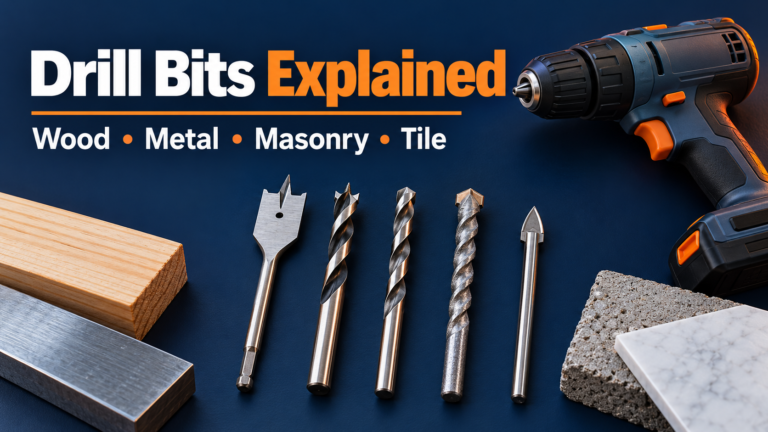

You have a flat-pack cabinet waiting in one room, curtain brackets to install in another and a shelf that needs pilot holes before the weekend. One drill should ideally handle the lot. The choice soon becomes cordless vs corded drill: battery-powered convenience or mains-powered continuity?
For most homeowners, the answer is not about finding the universally “stronger” format. It is about portability, how often you work, the materials you encounter, access to electricity, budget and whether you are willing to maintain and eventually replace batteries.
Quick Answer: Cordless or Corded?
A cordless drill makes more sense if
You value portability, fast setup, controlled screwdriving and the freedom to move between rooms, balconies or furniture without managing a cable.
A corded drill may suit you better if
Most drilling happens near a reliable outlet, you want sustained mains-powered operation, and you would rather not charge, store or replace batteries.
Best first choice for many homeowners
A well-chosen cordless drill/driver is usually the more versatile starting tool for ordinary furniture assembly, pilot holes, fastening and light household DIY. That is an EasyFixGear editorial judgment, not a claim that every cordless model outperforms every corded one. Frequent masonry work, long fixed-position sessions or a very tight budget can change the answer.
Cordless vs Corded Drill: Quick Comparison
The broad cordless vs corded drill differences below are useful starting points; individual models can differ substantially.
| Feature | Cordless drill | Corded drill |
| Portability | Excellent | Limited by power cable |
| Setup | Quick | Requires an outlet and cable management |
| Screwdriving | Usually very convenient on drill/drivers | Model dependent |
| Continuous operation | Limited by battery and workload | Strong advantage while mains power is available and within rated use |
| Weight | Battery contributes weight | No traction battery, but model weight varies |
| Power consistency | Depends on tool, electronics and battery state | Continuous mains supply; actual performance remains model dependent |
| Battery maintenance | Yes | No |
| Extension cord | Not required | Often required |
| Ownership Extras | Battery and charger required | No battery or charger required |
| Best for | Mobile household DIY | Fixed-location or longer drilling tasks |
| During power cuts | Works while a charged battery has capacity | Stops without mains power |
| Future battery cost | Possible | None |
What Is a Cordless Drill?
A cordless drill uses a rechargeable battery. A typical drill/driver has a chuck, variable-speed trigger, reverse and an adjustable clutch that limits fastening torque—useful for reducing overdriven furniture screws. Common families include 12V-class and 18V-class platforms, but voltage alone is not a performance rating.
Owning a compatible battery may make future “bare” tools cheaper, but compatibility must be exact. Makita India, for example, identifies 18V G-Series and 18V LXT as different platforms.
Do not assume every cordless drill has hammer mode, two gears, a brushless motor, an LED or high torque. Check the exact model and kit contents.
What Is a Corded Drill?
A corded drill draws electricity from an outlet and has no traction battery to charge or replace. It suits a workbench or fixed renovation area and may offer attractive upfront value.
The label remains broad: some are rotary drills, some add hammer action, and some can drive screws. A cord does not guarantee a clutch, good low-speed control or concrete capability.
Portability and Convenience
Cordless wins this category for most homes. There is no cable to route around furniture or an extension lead across a hallway, making flat-pack assembly, quick repairs and multi-room jobs easier. The trade-off is a battery that needs charging, adds weight and requires storage with its charger.

A corded drill is ready whenever mains power is available. That is convenient at a workbench, but cable reach, outlet position and safe routing can complicate quick jobs around an apartment.
Verdict: cordless is more convenient for mobile household work; corded remains practical when the work stays in one powered location.
Power and Performance
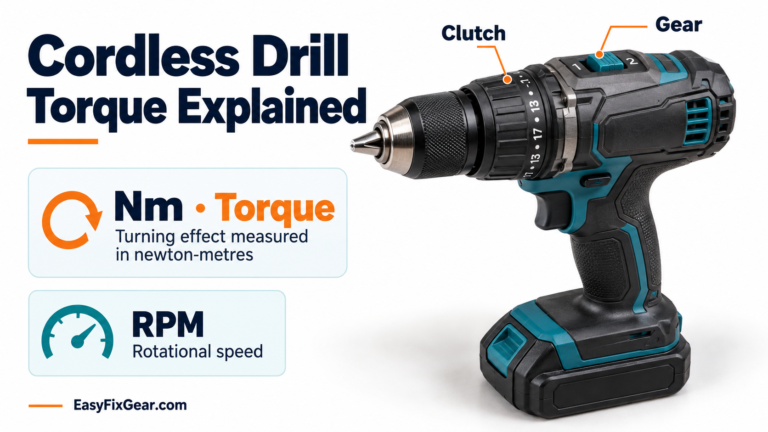
Avoid the shortcut that “corded drills are always more powerful.” Both formats range from light drills to demanding professional tools. Performance depends on motor, gearing, torque (twisting force), speed, chuck, bit, battery capability and tool class. Controlled low speed may matter more for screws than a high maximum figure.
Compare rated capacities for wood, metal or masonry. Do not compare cordless voltage directly with corded wattage: they describe different electrical characteristics, not equivalent performance.
Our drill torque and RPM guide explains why a single torque figure cannot describe overall drilling performance.
Battery Runtime vs Continuous Mains Power
Cordless runtime varies with capacity, material, bit size, load, speed, efficiency, temperature and battery condition. Universal “minutes per charge” claims mean little without a defined test. A second compatible battery extends working time but adds cost.
Understanding battery voltage and capacity: Voltage (V) identifies the battery’s electrical voltage class, while ampere-hours (Ah) describe its rated charge capacity. Within the same compatible battery platform, a higher-Ah battery generally provides more stored energy and can extend runtime under similar conditions, although it may also add weight and cost. Actual runtime depends on the drill, workload, battery condition and operating conditions. Neither voltage nor Ah alone tells you how powerful a drill will be.
A corded drill can operate while suitable mains power is supplied and the manual’s limits are followed. That is not an unlimited duty cycle: heat, dust and application limits still matter.
Which Is Better for Driving Screws?
A cordless drill/driver usually has the advantage. It is easy to carry to furniture, cabinets and household fixtures, and useful controls may include an adjustable clutch, low gear, variable-speed trigger and reverse. These features help start screws slowly and reduce overdriving.
Some corded drills can drive screws, but suitability depends on their low-speed control, reversing function, balance and whether they offer a clutch. A basic high-speed rotary drill may be awkward for delicate fasteners.
Want practical projects to start with? See our 10 Easy DIY Home Repairs You Can Do Yourself guide.
Which Is Better for Wood Drilling?
Either format can work well. For pilot holes and simple woodworking, the correct bit, suitable speed, chuck and rated capacity matter more than the cord. Secure the workpiece and follow tool and bit limits.
Which Is Better for Metal?
Either type can drill metal when rated for it. Use an appropriate sharp bit, suitable speed and a clamped workpiece. Hole size, thickness and alloy change the load; power source alone does not determine success.
Brick and Masonry Walls
For Indian homes, tool type matters more than whether the drill has a cord.
Cordless hammer drill/driver
An appropriately rated model with the correct masonry bit can suit occasional light holes in brick or compatible masonry. Follow its stated capacities.
Corded hammer drill
This can suit more frequent masonry holes near an outlet, but still needs the correct bit and rating for the material and hole size.
Rotary hammer
This is a different class, commonly using a dedicated mechanism and SDS-type holder. For demanding concrete, larger holes or frequent work, it may suit better than a general drill. Bosch’s Indian range specifies rotary-hammer impact energy and concrete ranges separately from impact drills.
A standard drill/driver without hammer action is not automatically suitable for reinforced concrete.
Cordless vs Corded Drill for Concrete
Concrete drilling depends on tool type, hammer mechanism, bit, concrete, reinforcement and hole size. Corded does not automatically mean suitable for concrete. For demanding work, a rotary hammer may be the correct category regardless of power source.
Consider hidden wiring, plumbing, gas lines and structural elements before drilling. Use suitable detection methods and building information. If the location cannot be assessed safely, call a qualified professional; do not drill structural elements without proper approval.

Weight and Handling
A cordless drill’s battery adds weight; a corded tool avoids the pack but its cable can tug or snag. Actual balance varies greatly. Grip, head length, trigger control and centre of gravity may matter as much as published weight, so hold the tool before buying when possible.
Cost Comparison in India
Corded drill
A basic corded drill can sometimes cost less because no battery and charger are included, although prices vary with gearing, hammer function and capacity.
Cordless starter kit
A starter kit normally includes the drill, battery and charger; some add a case. A “bare tool” price is misleading if you own no compatible battery or charger.
Longer-term cost
Cordless ownership may later involve an extra or replacement battery or charger. A supported shared platform can reduce the cost of future compatible bare tools. Corded ownership avoids battery expense but not inspection or service of cables and electrical components.
Prices and availability change, so this comparison deliberately avoids fixed price brackets. Compare complete kits, warranty terms and local service—not only the displayed tool price.
Replacement Batteries and Long-Term Ownership
Before buying cordless, check the exact battery family, replacement price and availability, charger availability and local authorised service. Lithium-ion packs age with time and use; an obsolete platform can leave a sound drill difficult to power. Use only specified batteries and chargers.
Corded drills avoid platform risk. Inspect the cable and plug, and stop if insulation, strain relief, plug or housing is damaged. Leave repairs to qualified or authorised service.
Power Cuts in India
A cordless drill works during an outage while its battery has charge; a corded drill stops. Treat this as a convenience, not a dominant buying factor, and never drill in poor emergency lighting.
Battery Ecosystem
A compatible platform may later power an impact driver, saw, sander, work light or garden tool, reducing duplicate chargers and improving future bare-tool value.
Batteries are not automatically compatible between brands or even between every tool family from the same manufacturer.
Verify the precise platform and voltage family officially; colour and physical resemblance do not prove compatibility.
Maintenance
Cordless
- Follow the manual for charging, temperature limits and storage.
- Inspect the battery and charger for damage.
- Keep the chuck and ventilation openings clean.
- Use only specified batteries and chargers.
- Remove the battery before adjustments or maintenance when instructed.
Corded
- Inspect the cable, plug and strain relief before use.
- Keep the chuck and ventilation openings clean.
- Route the cord away from the rotating bit and work area.
- Disconnect from power before adjustments or maintenance when instructed.
- Neither type should be cleaned, lubricated or opened contrary to the manufacturer’s instructions.
Which Is Better for Beginners?
For many first-time users, a compact cordless drill/driver is easier to live with: quick setup, no trailing cable and often a clutch with controllable screwdriving. Corded may suit occasional bench work, if you don’t want to own a battery, or longer stationary sessions. Prioritise control, balance and suitability over maximum numbers.
For a broader starter setup, compare 15 Essential Tools Every Homeowner Should Have and Best Tool Kits for Home Use in India.
Which Is Better: Cordless or Corded Drill for Different Home Tasks?

| User | Better starting choice | Reason |
| Complete beginner | Cordless | Usually easier for mixed drilling and controlled screwdriving |
| Apartment resident | Cordless | Fast setup, compact options and easy room-to-room use |
| Furniture assembly | Cordless | Portability, reverse, clutch and low-speed control are useful |
| Occasional wall drilling | Depends | Choose by wall material and whether hammer action is required |
| Frequent masonry drilling | Depends | Tool class matters; consider an appropriate hammer drill or rotary hammer |
| Workshop user | Corded | Attractive for fixed-position, longer sessions near an outlet |
| Budget-conscious buyer | Depends | Compare complete kit cost, job requirements and long-term battery expense |
| Already owns compatible batteries | Cordless | A verified bare tool may lower the incremental cost |
| Wants no battery maintenance | Corded | No battery charging, ageing, or replacement |
| Home with frequent power cuts | Cordless | Works while a charged battery has capacity |
Cordless Drill Advantages and Disadvantages
Advantages: excellent portability; quick setup; no mains cable; convenient room-to-room use; controlled screwdriving on suitable drill/drivers; potential platform benefits; operation during an outage while charged.
Disadvantages: charging and finite runtime; battery ageing, cost and weight; platform lock-in; storage for packs and charger; potentially higher starter-kit cost.
Corded Drill Advantages and Disadvantages
Advantages: sustained mains operation within rated use; no charging or battery-replacement cost; potentially attractive initial value; practicality for fixed-location work.
Disadvantages: restricted movement; outlet and possible extension-cord dependence; less convenient multi-room work; no use during an outage; trip or snag risks from poor cable management.
Drill Safety: Non-Negotiable Basics
Power drills can cause eye injuries, kickback, entanglement, electric shock and damage to hidden services. Manufacturer manuals and recognised safety guidance consistently emphasise control, suitable protective equipment and proper inspection.
- Read the tool, battery, charger and accessory instructions before use.
- Wear suitable eye protection; add hearing or dust protection when the risk assessment and instructions call for it.
- Use the correct, undamaged bit and stay within rated capacities.
- Clamp or otherwise secure the workpiece.
- Check for hidden wiring, plumbing, gas lines and structural elements before wall drilling.
- Maintain stable footing and hold the tool as instructed; use an auxiliary handle when supplied or required.
- Keep hair, loose clothing and jewellery away from rotating parts.
- For corded tools, keep the cable away from the bit and inspect the plug, insulation and strain relief. Use outlets and extension cords only as the manufacturer and applicable electrical guidance allow.
- For cordless tools, use only specified compatible batteries and chargers. Do not use a damaged, swollen, leaking or unusually hot pack.
- Disconnect mains power or remove the battery before maintenance, bit changes or adjustments when the manufacturer instructs you to do so.
- Stop immediately if the drill, cord, plug, battery or charger appears damaged or behaves abnormally.
Manufacturer safety guidance, including DeWalt’s drill instructions and Makita India’s safety guidance, emphasizes proper inspection, control, suitable protective equipment and correct accessories.
Download Makita India’s Safety Tool Guide
Common Buying Mistakes
Assuming corded always means more powerful
Compare tool class and rated capability; powerful cordless machines and modest corded drills both exist.
Assuming cordless is automatically better
Portability adds little when all work stays beside a reliable outlet, and batteries are unwanted.
Comparing battery voltage directly with motor watts
They are not equivalent performance ratings. Check rated applications, speed, torque where specified and manufacturer guidance.
Ignoring hammer function for masonry
Identify brick, block or concrete, then choose the proper mechanism and bit.
Buying a bare cordless tool by mistake
“Tool only” often excludes battery and charger. Confirm the package contents.
Ignoring replacement battery availability
Check platform support, battery price and local stock before committing.
Buying too much—or too little—drill
A large professional tool can be awkward for cabinet screws; an ordinary drill may be inadequate for repeated concrete work.
Ignoring weight, grip and balance
These affect control, especially overhead or in tight spaces.
Choosing mainly by accessory count
Numerous low-value bits do not compensate for an unsuitable drill or weak service support.
What Should Most Homeowners Buy First?
Choose Cordless If:
You assemble furniture, install shelves, move between rooms, value controlled screwdriving or already own compatible batteries.
Choose Corded If:
You mainly work near an outlet, have longer fixed-position drilling sessions, don’t want battery maintenance or find that a suitable corded model offers better value for your needs.
Consider a Hammer Drill/Rotary Hammer If:
Masonry or concrete is a recurring requirement. Choose by the actual material and drilling demand—not simply by whether the tool has a cord.

For most households, start with a good cordless drill/driver for portable drilling and controlled screwdriving. If brick drilling is required, consider an appropriately rated hammer drill/driver.
Choose corded if work stays near an outlet, portability offers little value, and you want sustained mains operation without battery ownership.
Decided cordless is right for you? See our researched guide to the Best Cordless Drills for Home Use in India.
Do You Need Both?
Usually not. One suitable drill is enough. Both may make sense for frequent DIY, workshop or demanding masonry users, but buy a second only when recurring work exposes a real limitation.
Use The Ultimate Home Maintenance Checklist to identify the jobs you actually repeat before expanding the kit.
Final Verdict:

The useful answer to cordless vs corded drill is personal: cordless is the better first fit for many mobile, mixed household tasks; corded remains excellent for fixed, mains-powered work. Choose the drill based on the work you actually do—not simply whether it has a battery or a power cord.
Frequently Asked Questions
Which is better: cordless or corded drill?
Cordless is usually better for portable household drilling and screwdriving. Corded may be better for fixed-position work, sustained mains operation and buyers who do not want batteries. The correct tool class still matters more than the power source.
Is a cordless drill powerful enough for home use?
Many are, but capability varies by model. Choose using the manufacturer’s rated materials, capacities, controls and intended applications—not voltage alone.
Is a corded drill better for concrete?
Not automatically. Concrete performance depends on the hammer mechanism, bit, concrete and hole size. Demanding work may require a rotary hammer, corded or cordless.
Can a cordless drill drill into brick walls?
An appropriately rated cordless hammer drill/driver with a suitable masonry bit can handle some light brick drilling. Check the model’s stated capacity and the wall before work.
Which drill is better for furniture assembly?
A cordless drill/driver is usually more convenient because it is portable and commonly offers reverse, variable speed and an adjustable clutch.
Do cordless drills lose power as the battery drains?
Behaviour varies. Many modern lithium-ion tools use electronics that maintain useful performance for much of the charge and then stop or reduce output when protection activates. Load, temperature, battery condition and design affect the result.
Are corded drills cheaper than cordless drills?
Basic corded drills can cost less because no battery and charger are included. Compare complete kits and capabilities; prices vary widely within both categories.
How long does a cordless drill battery last?
Runtime per charge depends on capacity, load, material, speed, temperature and condition. Overall service life depends on age, cycles, heat, storage and care. Use the manufacturer’s model-specific guidance.
Do I need a hammer drill for home use?
Not for furniture, most screwdriving or ordinary wood and metal holes. You may need hammer action for suitable brick or masonry; demanding concrete may call for a rotary hammer.
Should a beginner buy a cordless or corded drill?
A compact cordless drill/driver is the best starting point for many beginners. Choose corded if work is stationary, mains access is easy, and battery ownership offers little value.
Is a Cordless Drill Worth Buying for Occasional Home Use?
Yes, a cordless drill can be worth buying for occasional home use, especially if you assemble furniture, tighten screws, install household fittings or perform small DIY repairs.
Its main advantage is convenience. You can move between rooms, work in tight spaces and complete quick jobs without finding a nearby power outlet.
However, cordless drills generally cost more than comparable basic corded models when batteries and chargers are included. Batteries also need charging and may eventually require replacement.
If you only drill occasionally at a fixed workbench near a power outlet, a suitable corded drill may offer better value. For frequent masonry drilling, choose a tool specifically rated for the material rather than relying on a basic cordless drill/driver.
Bottom line: A compact cordless drill/driver is a practical first purchase for many homeowners who prioritise portability and screwdriving convenience. A corded drill remains a sensible alternative when budget, continuous mains power or fixed-location drilling matters more.
Ready to choose a cordless model? Compare our recommended Best cordless drills for Indian homes along with compatible drill bit types for different uses, before buying.